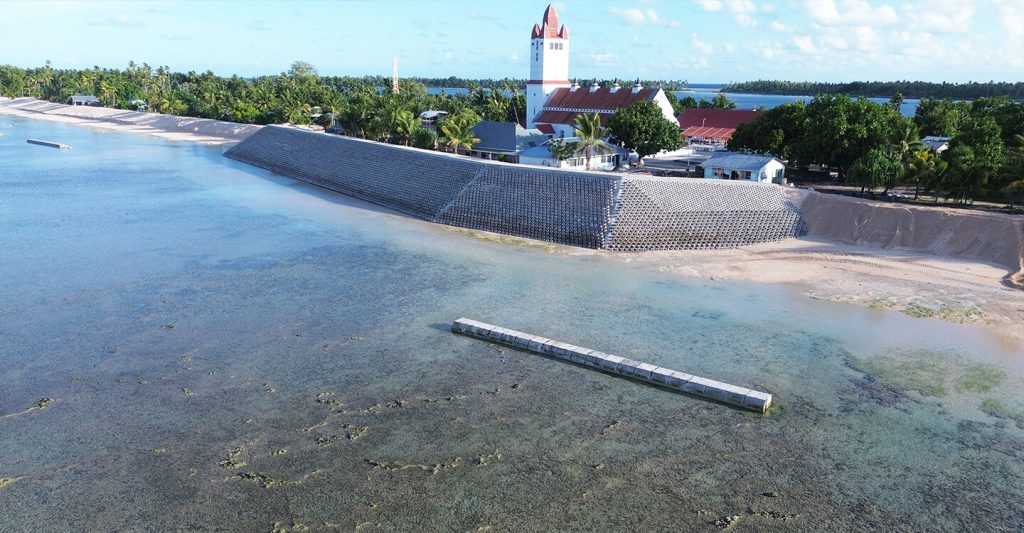
The Maritime Investment in Climate Resilient Operations II (MICRO II) is a major World Bank-funded project aimed at strengthening the climate resilience and safety of maritime infrastructure across Tuvalu’s outer islands.
Key works are being delivered on the islands of Nanumaga and Nanumea, including the construction and upgrade of workboat harbors, safe berthing facilities, breakwaters, jetties, passenger and cargo terminals, and associated access infrastructure. These remote Pacific islands face extreme exposure to rising sea levels, tropical cyclones, storm surges and constant saltwater attack, making long-term durability of concrete structures critical.
Main Contractor: Wagners
The Challenge: Extreme Marine Environment & Remote Precast Construction Harbor and coastal structures on Nanumaga and Nanumea are subject to one of the most aggressive environments in the world — continuous saltwater immersion, high humidity, wave action and frequent extreme weather events.
Traditional steel reinforcement would rapidly corrode in these conditions, leading to cracking, spalling and premature failure of precast concrete blocks. In addition, the remote location and limited local resources required the use of large volumes of imported precast concrete elements that needed reliable, lightweight and corrosion-free reinforcement that could be efficiently fabricated and transported.
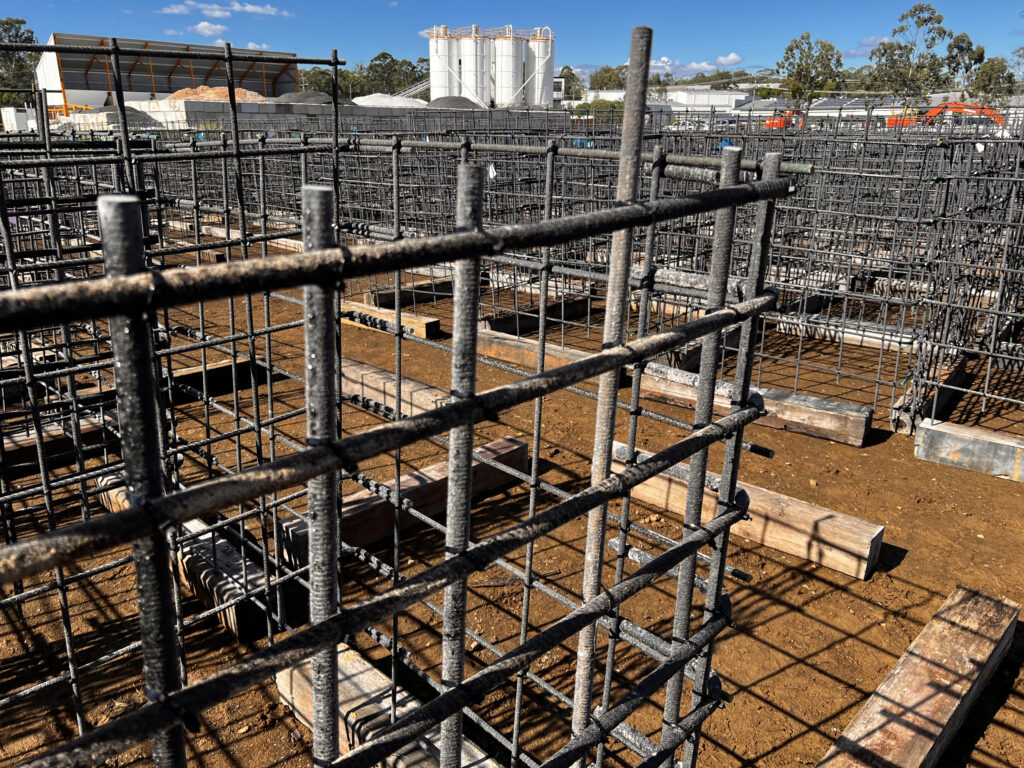
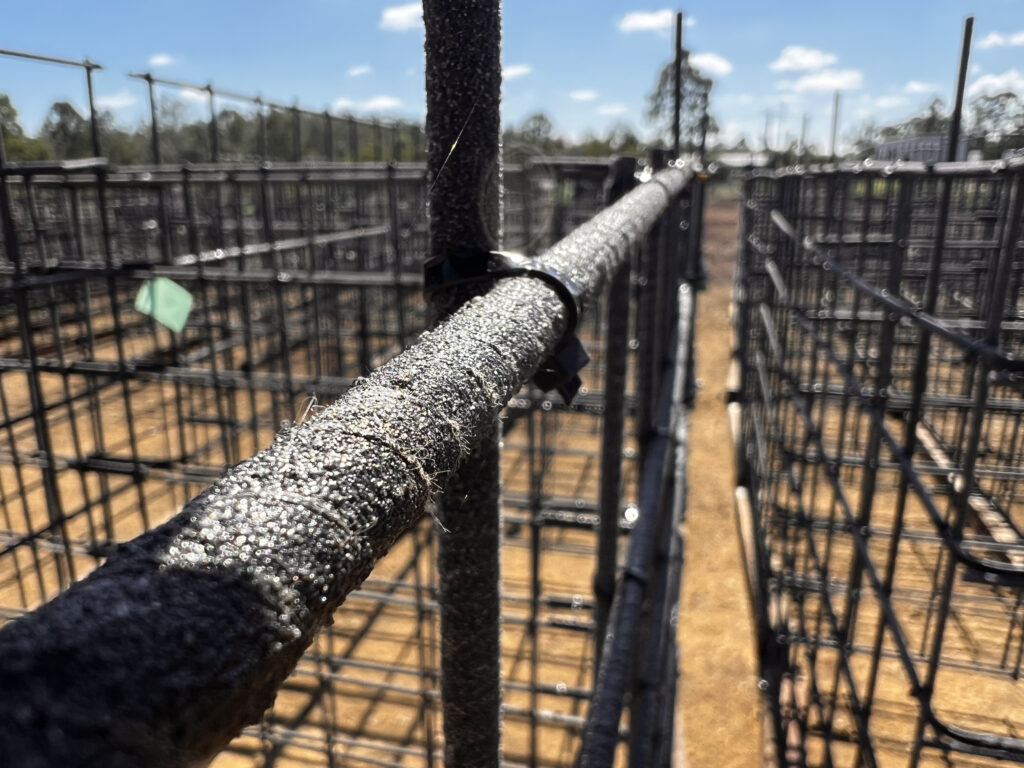
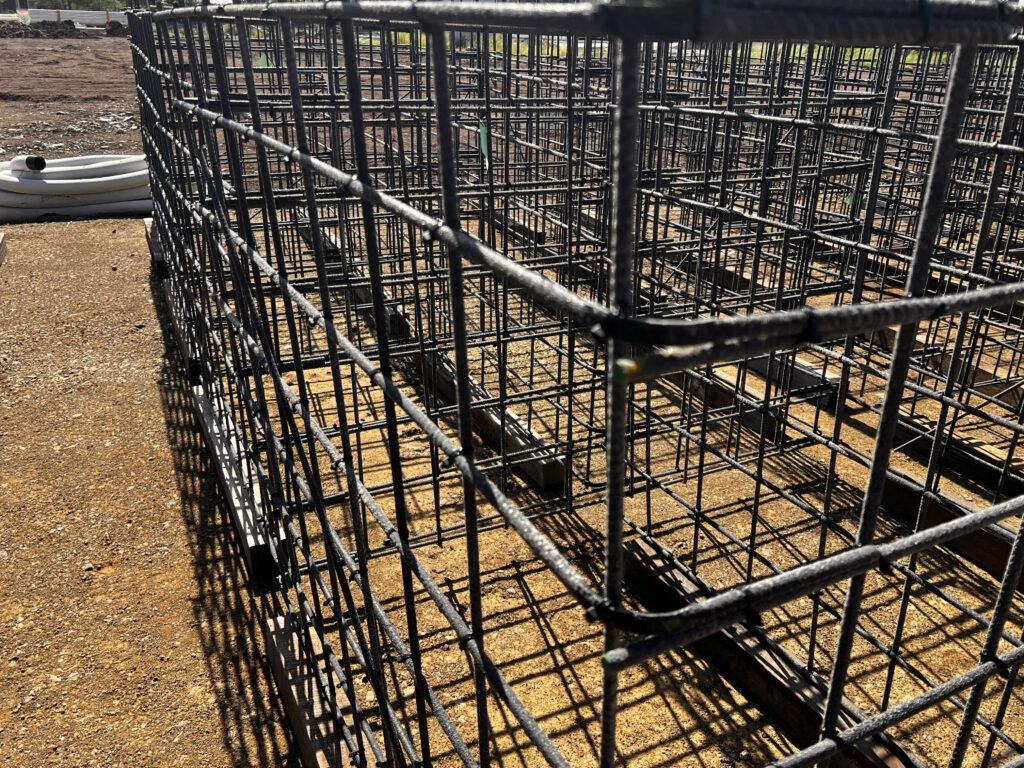
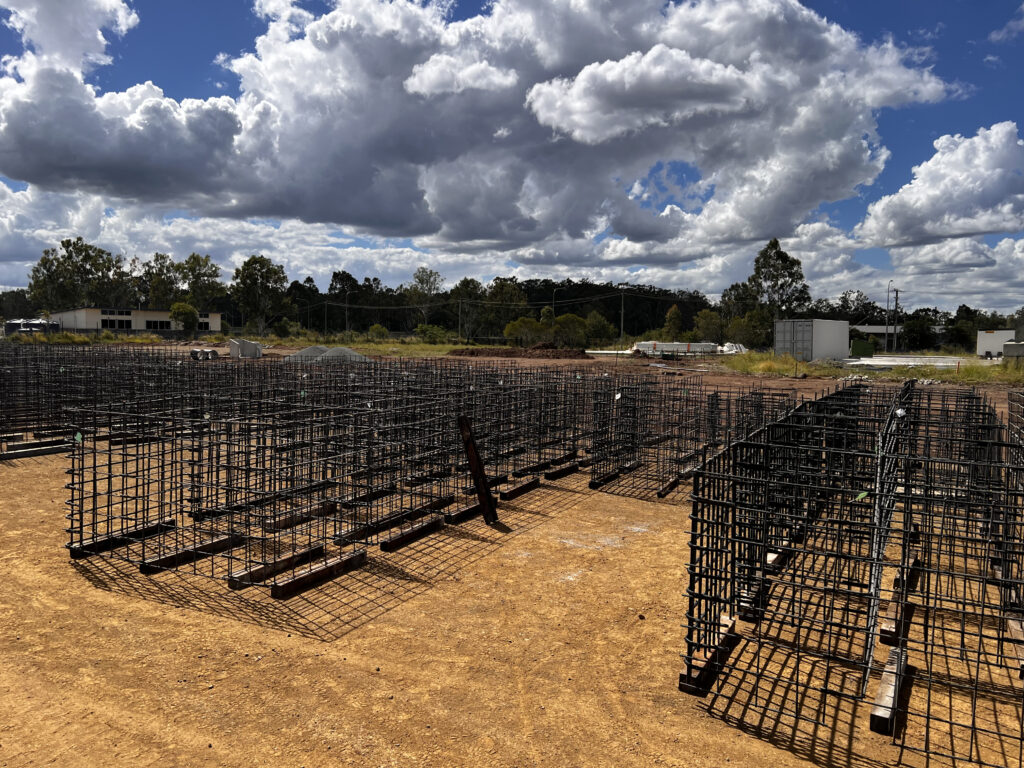
The Solution: Tens of Kilometres of GFRP Rebar & Bent Bars We supplied tens of kilometres of BlackBar™ GFRP rebar and custom bent bars for the precast concrete blocks used throughout the MICRO II harbor works on Nanumaga and Nanumea, delivered under the main contractor Wagners.
GFRP rebar was selected for its outstanding performance in marine environments:
- Completely immune to chloride-induced corrosion
- High tensile strength and excellent bond with concrete
- Lightweight (approximately one-quarter the weight of steel), significantly reducing transport and handling costs to remote islands
- Available as straight bars and precision bent bars to suit precast cage fabrication
- Fully compliant with Australian Standard AS 5204
The GFRP reinforcement was incorporated into the precast concrete blocks that form the core structural elements of the new climate-resilient harbor infrastructure.
Project Outcomes and Benefits The use of GFRP rebar and bent bars delivers major advantages for this remote Pacific project:
- Exceptional long-term durability in a highly corrosive saltwater environment
- Reduced transport and installation costs due to the lightweight nature of the reinforcement
- Extended service life of precast elements with minimal maintenance requirements
- Improved resilience of critical maritime infrastructure against climate change impacts
- Support for safer and more reliable access to essential cargo and services for the island communities
This project demonstrates the value of GFRP reinforcement in delivering sustainable, climate-resilient infrastructure in some of the world’s most challenging marine environments.
Why Choose GFRP Rebar for Marine & Precast Coastal Projects? GFRP rebar and bent bars are the ideal solution for precast concrete elements in harbors, breakwaters, seawalls and coastal protection works — especially in remote or highly corrosive locations. BlackBar™ provides proven corrosion-free performance, construction efficiency and long service life for critical infrastructure across the Pacific and beyond.
Contact us today to discuss GFRP rebar and bent bar solutions for your next marine, coastal or climate-resilience project.
https://hallcontracting.com.au/project/tuvalu-coastal-adaptation-project/