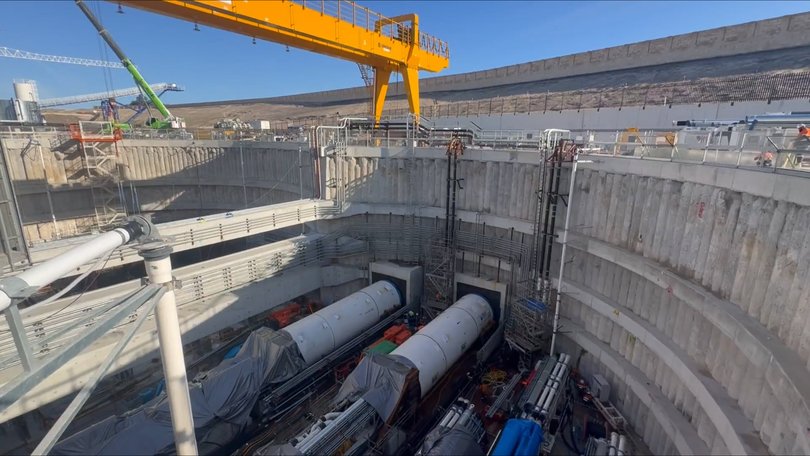
The Alkimos Seawater Desalination Plant (ASDP) is a landmark climate-resilient water infrastructure project located in Alkimos, approximately 40 km north of Perth, Western Australia. Delivered by the Alkimos Seawater Alliance (Water Corporation, Acciona and Jacobs), with specialist geotechnical and civil works support from Geotech (an Acciona subsidiary), the project strengthens long-term water security for the region.
Stage 1 will deliver approximately 150 million litres of drinking water per day (50 billion litres annually), with capacity to expand to 100 billion litres. Key components include marine intake and outfall tunnels, reverse osmosis desalination facilities, integrated groundwater treatment, large drinking water storage tanks, and a 33.5 km pipeline connecting to the Wanneroo Reservoir. Construction commenced in mid-2024, with first water targeted for 2028. The plant is designed for high sustainability performance, including net-zero greenhouse gas ambitions.
The Challenge: Extreme Corrosion Risk in Marine and Chemical Environments Desalination plants and associated marine structures face highly aggressive conditions — constant chloride exposure from seawater, hypersaline brine, chemical processing, and repeated wet-dry cycles. Conventional steel reinforcement is vulnerable to chloride-induced corrosion, which causes concrete cracking, spalling, reduced structural capacity and expensive ongoing repairs.
For critical water-retaining structures, intake and outfall works, tanks, pump stations and other reinforced concrete elements, a durable, corrosion-free solution was essential to achieve the required long service life and minimise whole-of-life costs.
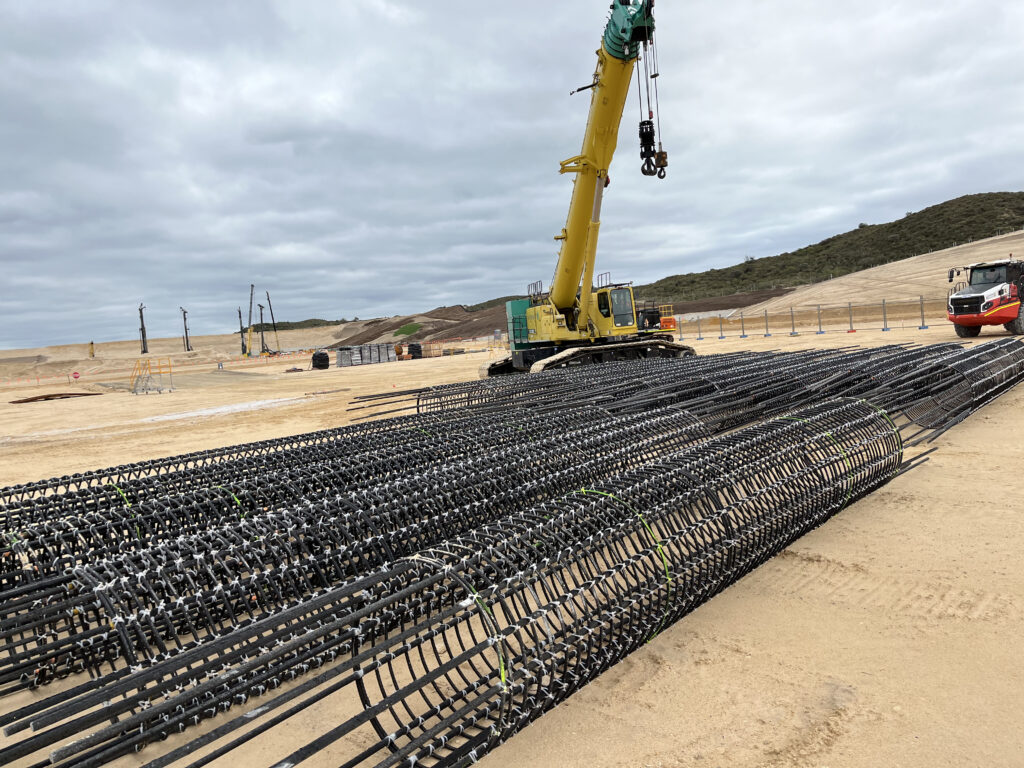
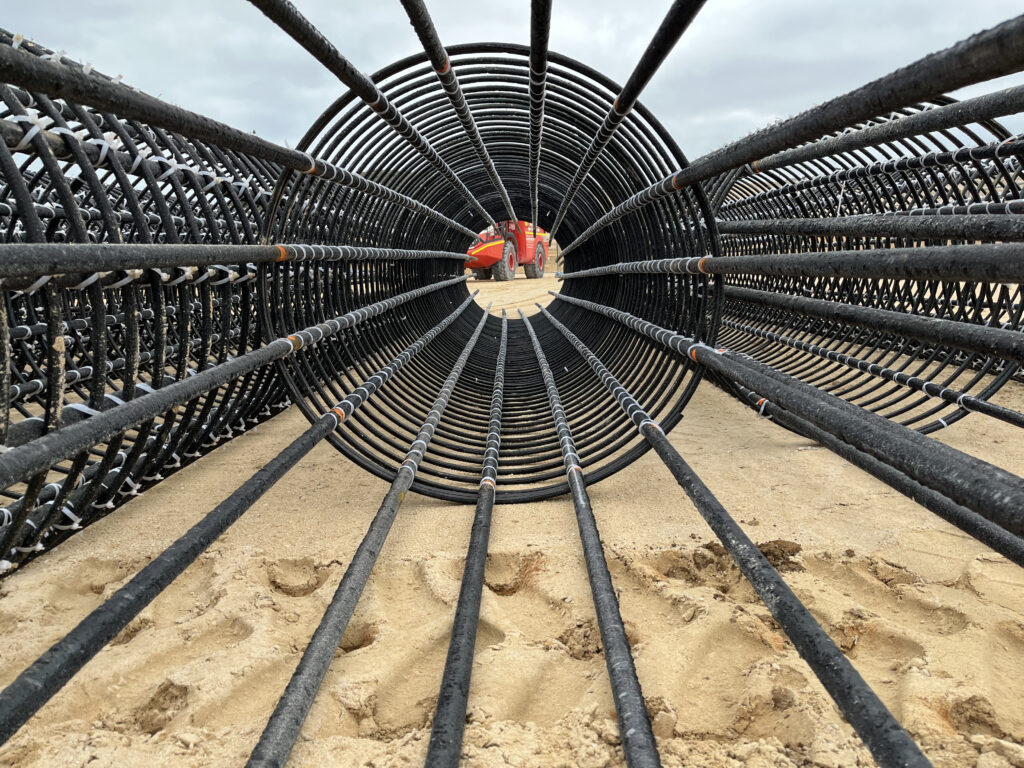
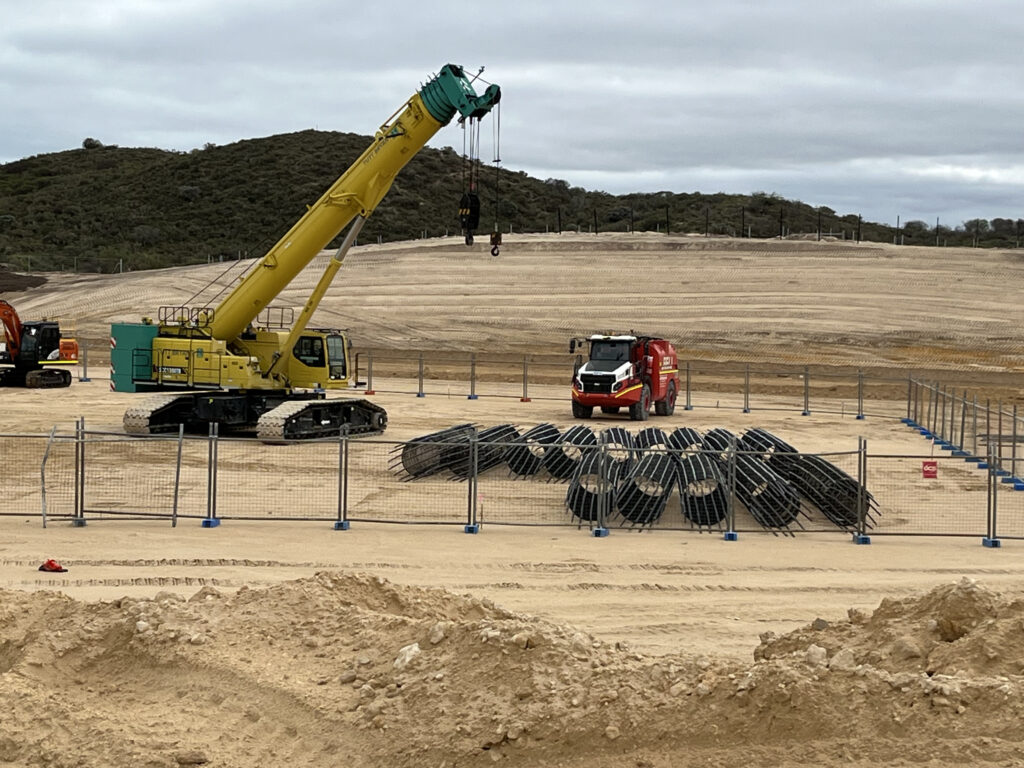
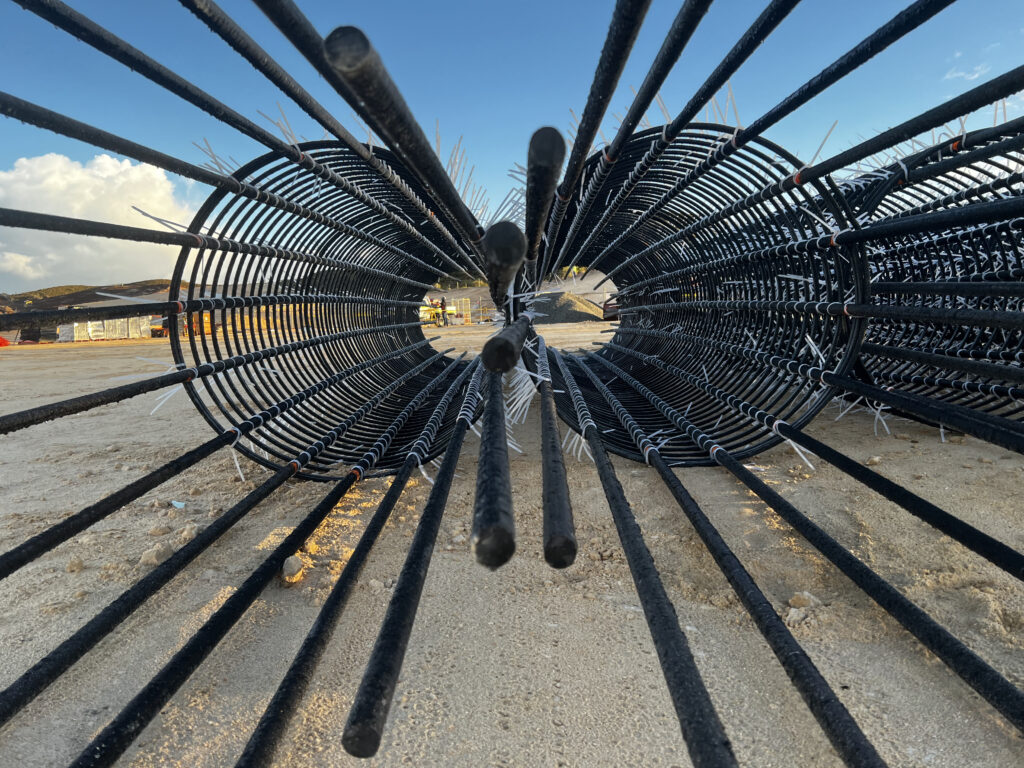
The Solution: High-Performance GFRP Rebar BlackBar™ GFRP rebar (glass fibre reinforced polymer / FRP composite rebar) was selected for DWall (soft eye) reinforcement.
GFRP rebar for desalination plants offers decisive advantages over steel:
- Completely immune to chloride-induced corrosion and highly resistant to chemicals present in desalination processes
- High tensile strength combined with approximately one-quarter the weight of steel, making it a true lightweight GFRP rebar solution that speeds installation and improves site safety
- Excellent durability in marine environments, supporting design lives of 100+ years with minimal maintenance
- Non-conductive and electromagnetically neutral
- Fully compliant with Australian Standard AS 5204 for fibre-reinforced polymer bars
These properties make BlackBar™ an ideal non-metallic reinforcement for marine structures, desalination facilities and other aggressive environments across Western Australia and Australia.
Project Outcomes and Benefits By specifying high-performance GFRP rebar, the Alkimos project gains:
- Superior long-term structural integrity in a corrosive coastal environment
- Significantly reduced risk of corrosion-related deterioration and lower whole-of-life maintenance costs
- Faster, safer and more efficient construction due to the lightweight nature of the reinforcement
- Strong alignment with the project’s sustainability and resilience objectives
The Alkimos Seawater Desalination Plant forms part of a major Water Corporation program supporting water security for millions of Western Australians while generating substantial local employment and economic activity.
Why Choose GFRP Rebar for Desalination and Marine Projects? GFRP rebar is the proven choice for desalination plant reinforcement, marine concrete structures, water and wastewater treatment facilities, coastal works and any application where corrosion-free performance is critical. As a leading lightweight GFRP rebar supplier in Australia, we deliver reliable, long-lasting non-metallic reinforcement that protects assets for generations.
Contact us today to discuss BlackBar™ GFRP rebar solutions for your next desalination, marine or infrastructure project in Western Australia or across Australia.
/case-studies/alkimos-desalination-gfrp-rebar