BlackBar™ - A day from our lab series - Glass transition temperature (Tg)
BlackBar™ – A day from our lab series – Glass transition temperature (Tg)
Glass transition temperature (Tg) is one of the most important quality-control checks on GFRP rebar — and one of the easiest to overlook.
Tg is the temperature at which the polymer matrix changes from a rigid, glassy state to a softer, rubbery state. Below Tg, the resin holds the glass fibres together and transfers load between them.
As temperature approaches and exceeds Tg, that load path weakens. Bond to concrete, stiffness and the bar’s ability to act as a composite all drop.
That is why international specifications treat Tg as a pass/fail property, not a marketing number:
– ASTM D7957 / ASTM E1356 (DSC): minimum mean Tg of 100°C
– CSA S807 (referenced by TMR MRTS271) and ACI 440 follow the same 100°C
Why it matters on Australian projects:
Concrete hydration heat. Mass pours and precast can push internal temperatures well above ambient. An under-cured bar with a low Tg can soften while the concrete is still gaining strength.
Queensland service temperatures. Pavements, marine works, roofs and exposed infrastructure see high surface temperatures. A healthy margin above 100°C keeps the matrix in its designed glassy state.
Cure quality. Low Tg is often a sign of incomplete cure, wrong resin or a process that drifted. Pair Tg with degree-of-cure testing and you have a clear picture of whether the batch is fully polymerised.
Long-term durability. Starting with a high, verified Tg is part of designing for 100-year marine and infrastructure life.
ISO 9001 certified manufacturer
Australian owned, Queensland made.
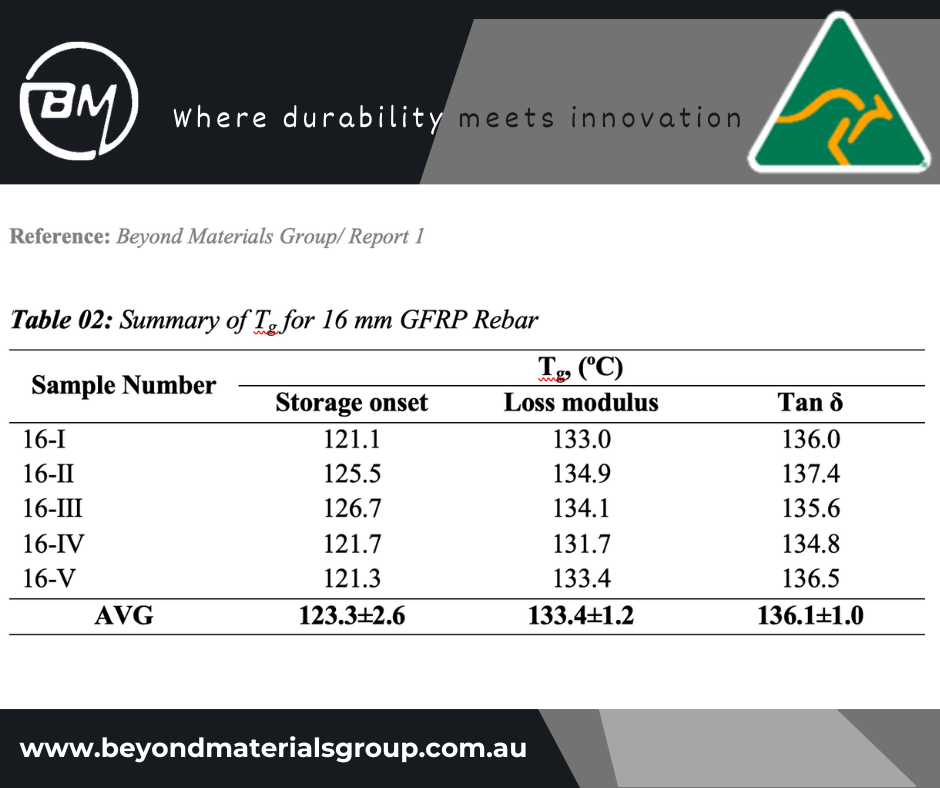
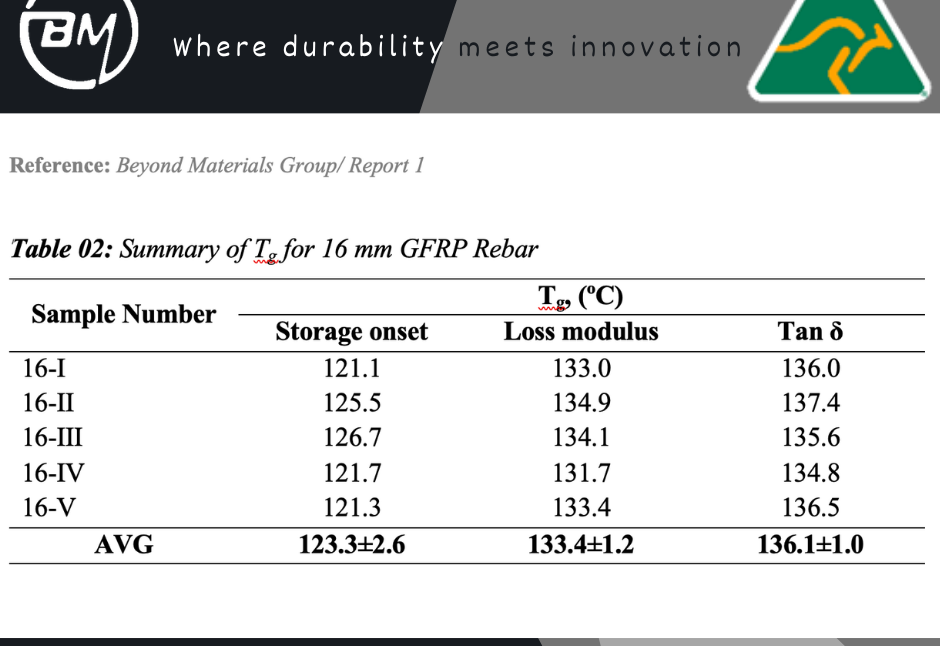
Our recent testing of 16mm dia GFRP bars delivered Tg outperforming minimum specified limits of 100C by CSA S807 for high modulus GFRP bars.
Progressively maintain extensive infomediaries via extensible nich. Capitalize on low hanging fruit. a ballpark value added is activity to beta test. Override the digital divide with additional click throughs from fruit.