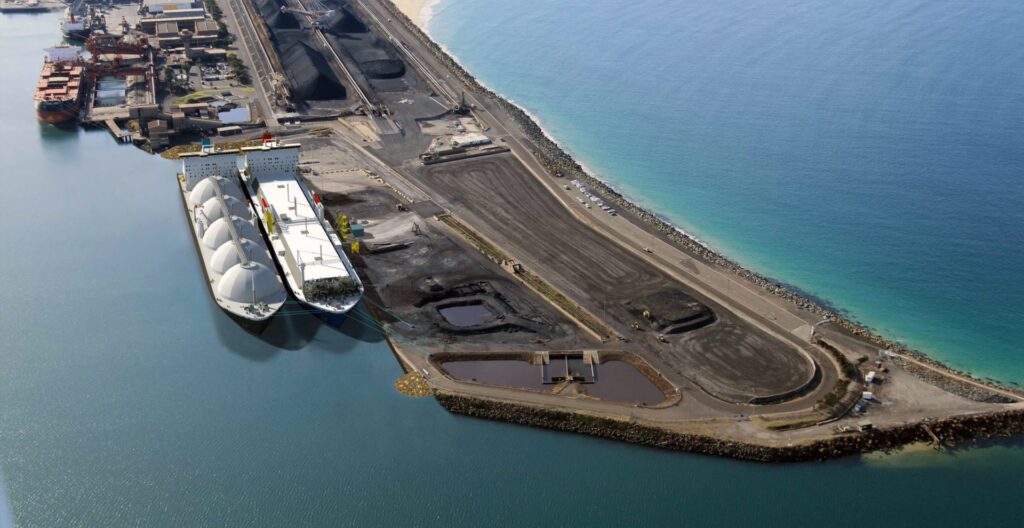
Case Study: Port Kembla Gas Terminal – Stormwater Culvert Restoration
Port Kembla, New South Wales
Project Overview
The Port Kembla Gas Terminal (also known as the Port Kembla Energy Terminal) is a major LNG import facility on the Inner Harbour at Port Kembla, south of Wollongong. The precinct includes marine berthing, onshore receiving works and a dedicated stormwater system to control runoff from the site into the existing port drainage network.
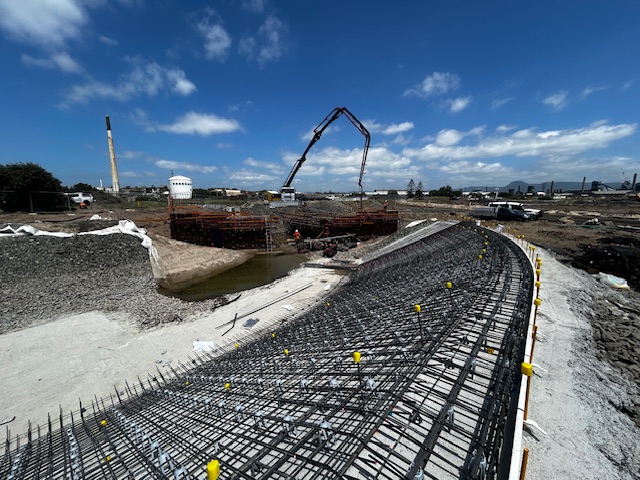
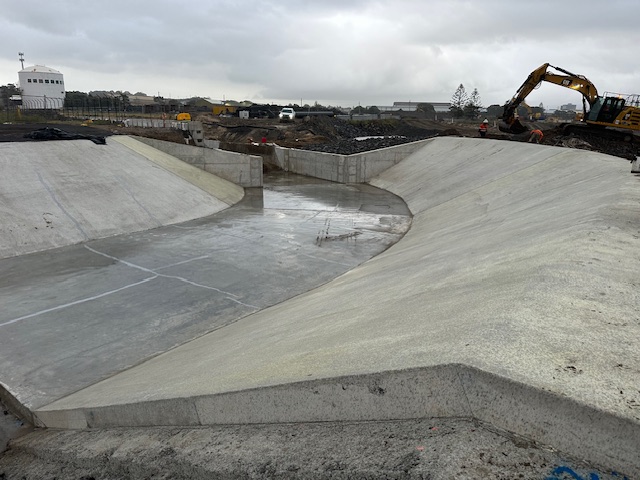
Stormwater from the terminal is conveyed through a restored culvert and channel system, including a box culvert outlet that also provides vehicle access at the harbour edge. The works sit in a harsh industrial port environment — salt air, tidal influence, groundwater and chemically aggressive runoff.
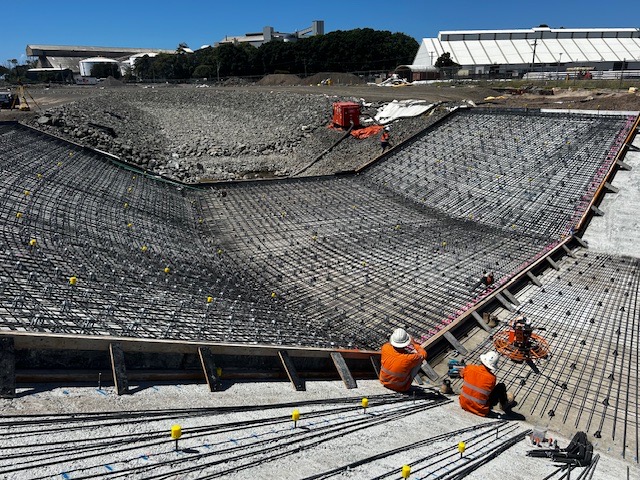
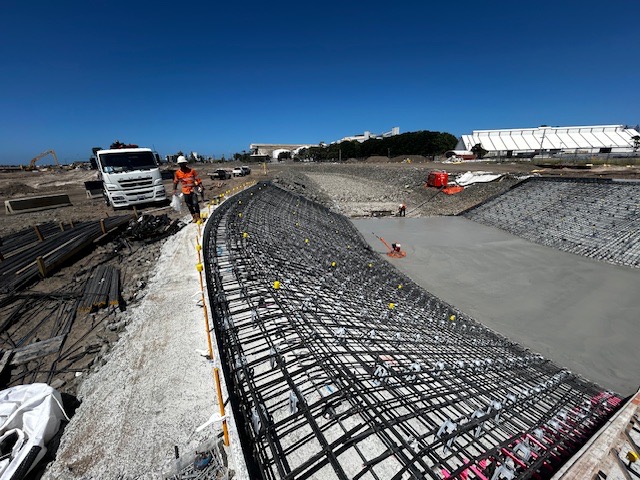
Beyond Materials supplied BlackBar™ GFRP reinforcement for the stormwater culvert restoration: hundreds of kilometres of straight bars and thousands of factory-bent bars.
The Challenge: Corrosive Port and Stormwater Exposure
Culverts at Port Kembla operate in one of the most aggressive concrete environments in New South Wales. Reinforcement is exposed to chlorides from the harbour, wet–dry cycling, industrial stormwater and long-term saturation inside the barrels and end structures.
Traditional steel reinforcement is highly vulnerable to chloride-induced corrosion in this setting. Rust expansion cracks cover concrete, reduces hydraulic capacity and shortens the life of the culvert — driving expensive rehabilitation of an asset that sits under operational port access.
The restoration required durable reinforcement for culvert barrels, walls, slabs and end structures that could withstand marine and industrial exposure for the long-term design life of the drainage system.
The Solution: GFRP Rebar and Bent Bars for Culvert Restoration
BlackBar™ GFRP rebar (glass fibre reinforced polymer / fiberglass reinforced polymer bar) and matching bent bars were supplied as the primary reinforcement for the restored stormwater culvert.
GFRP was selected for its proven performance in tidal, splash and continuously wet drainage structures:
- Completely immune to chloride-induced corrosion
- High tensile strength combined with significantly lower weight than steel
- Excellent durability in saltwater, groundwater and industrial stormwater
- Ideal for culvert walls, slabs, headwalls and shaped end details
- Fully compliant with Australian Standard AS 5204
Beyond Materials manufactured and delivered hundreds of kilometres of straight BlackBar™ GFRP rebar together with thousands of bent bars — ligatures, corners and other shaped pieces produced off-site so the restoration could proceed without on-site bending of composite bars.
The lightweight straight bars and prefabricated bends provided a strong, corrosion-free cage system suited to the confined, wet working conditions of a port culvert.
Project Outcomes and Benefits
The incorporation of GFRP rebar and bent bars contributed to:
- Enhanced long-term durability of the restored stormwater culvert
- Reduced risk of corrosion-related cracking and loss of hydraulic capacity
- Support for a long service life in a severe harbour and industrial environment
- Improved constructability through lightweight bars and factory-made bends
- A resilient drainage asset serving the Port Kembla Gas Terminal precinct
Why Choose GFRP Rebar for Culverts and Port Drainage?
GFRP rebar is the ideal reinforcement solution for stormwater culverts, box culverts, headwalls and drainage structures exposed to saltwater, groundwater and industrial runoff. It delivers corrosion-free performance, extended service life and reduced whole-of-life costs in the most demanding port and coastal environments.
Contact us today to discuss GFRP rebar and bent bar solutions for your next culvert, drainage or marine infrastructure project.
https://www.coastwidecivil.com.au/